Skip to content

A residential floor can take far more punishment than people realize. Vehicles sit in the same spots every day, heavy storage cabinets stay loaded year-round, rolling toolboxes cross the concrete, and home workshops place concentrated weight on small areas of the slab. In New York garages and utility spaces, the floor also has to deal with winter moisture, road salt, temperature changes, and dirt brought in from outside.
A heavy-duty residential epoxy floor gives homeowners a stronger surface built for real use. The right epoxy flooring system protects the concrete below while creating a floor that is easier to clean, more resistant to wear, and better prepared for heavy household demands.
The important part is choosing the right system and installing it correctly. Heavy-duty performance does not come from simply rolling epoxy over bare concrete.
What Makes A Residential Epoxy Floor Heavy Duty?
A heavy-duty epoxy floor depends on more than coating thickness. Its performance depends on the condition of the concrete, how the surface is prepared, how the coating bonds to the slab, and which products are used throughout the system.
Professional epoxy floor installation generally begins with mechanical surface preparation. The concrete is opened up so the coating can form a strong mechanical bond instead of sitting on top of a smooth or contaminated slab. Cracks, damaged areas, oil contamination, and other concrete problems also need to be addressed before the coating system is installed.
Once the foundation is properly prepared, the epoxy flooring contractors can build a coating system for the way the room will actually be used. A garage carrying two vehicles every day has different demands than a lightly used basement or utility room.
This system-based approach is what separates a durable residential coating from a thin DIY application.
How Much Weight Can Epoxy Flooring Handle?
There is no single weight rating that applies to every epoxy floor.
The concrete slab itself carries the structural load. The role of the epoxy floor coating is to protect the surface of that slab from abrasion, chemicals, staining, impacts, tire traffic, and other forms of wear.
That distinction is important.
A properly installed heavy duty residential epoxy floor can perform under normal passenger vehicles, SUVs, trucks, large storage systems, workbenches, tool cabinets, appliances, and other common residential loads when the underlying concrete is structurally suitable.
Problems often begin when heavy objects concentrate force in very small areas. Sharp metal feet, dragged equipment, damaged casters, and dropped tools can put considerably more stress on a coating than a parked vehicle distributing its weight across four tires.
Good flooring design therefore considers how the load reaches the floor, not simply how heavy the object is.
Epoxy Flooring For Garages With Heavy Vehicles
The garage is usually the hardest-working residential concrete surface.
A NY garage may hold trucks, SUVs, motorcycles, lawn equipment, snow blowers, storage racks, freezers, tools, and recreational equipment all within the same space. Tires repeatedly follow the same paths, while parked vehicles keep pressure on the same sections of floor for hours at a time.
A professionally installed epoxy garage floor creates a protective layer between those demands and the concrete below.
Proper preparation is especially important in vehicle areas. Poor adhesion can allow weak coatings to peel or lift under tire traffic. Oil, automotive fluids, dirt, and road contaminants can also shorten the life of inadequately prepared flooring.
Homeowners expecting regular vehicle traffic should have the system designed specifically as a garage floor rather than choosing coating products based on appearance alone.
Heavy Storage Needs A Stronger Floor
Modern garages are often storage rooms as much as parking areas.
Large cabinets may hold hundreds of pounds of tools, automotive supplies, household items, sports equipment, and seasonal storage. Shelving systems place that load through several narrow legs or mounting points.
A heavy duty residential epoxy floor can protect heavy-duty concrete around these storage zones from abrasion, stains, dust, and routine movement.
Homeowners should still avoid dragging heavy metal cabinets directly across the finished surface. Even a strong epoxy floor coating can be scratched when hundreds of pounds are forced across a sharp edge.
Using quality wheels, protective feet, or pads beneath unusually concentrated loads helps the coating perform better over the long term.
Workshops Put Epoxy Flooring To The Test
Home workshops create a different set of flooring problems.
Workbenches remain stationary, while rolling carts, compressors, tool chests, jacks, woodworking equipment, and other machines move across the room. Dropped hand tools create sudden impacts. Grease, oil, paint, and other materials may also reach the surface.
Bare concrete absorbs many of these contaminants and gradually becomes stained or difficult to clean.
A properly selected epoxy floor coating closes the porous surface and creates a more manageable workspace. Spills can usually be cleaned before they penetrate the slab, and routine dust is easier to remove from a coated floor than unfinished concrete.
For serious workshops, the coating system should be selected around the actual chemicals, equipment, impact exposure, and traffic expected in the room.
New York Weather Adds Another Layer Of Stress
Heavy objects are only one part of the durability equation. New York garages experience major seasonal changes. Vehicles can bring snow, slush, water, deicing residue, sand, and road grime onto the floor during winter. Summer heat places the same slab under completely different conditions.
Concrete also naturally expands, contracts, and moves. An epoxy coating cannot make unstable concrete structurally sound or permanently stop every future crack. Proper epoxy floor installation instead starts by evaluating the slab and identifying conditions that could affect coating performance.
Existing cracks may need repair before installation, while moisture conditions should also be considered when there is reason to suspect vapor moving through the slab.
Installing a premium coating over unresolved concrete problems can still produce a poor result.
Why Surface Preparation Matters Under Heavy Loads
Surface preparation is one of the most important steps in any high-performance epoxy flooring project.
Concrete may look clean while still containing curing compounds, sealers, oil, contaminants, smooth finished areas, or weak surface material that interferes with adhesion.
Mechanical grinding prepares the concrete for the coating system by removing unsuitable surface material and creating a profile designed for bonding.
This becomes even more important on floors expected to handle heavy use.
Vehicles, rolling equipment, storage systems, and daily foot traffic continually challenge the coating. If the epoxy is strongly bonded to properly prepared concrete, those stresses are transferred through a much more dependable flooring system.
If adhesion is weak, even an expensive coating can eventually peel, chip, or separate.
Not Every Epoxy Floor Is Built The Same
Homeowners searching for epoxy flooring sometimes compare projects based almost entirely on price.
That can be misleading.
Two floors described as “epoxy” may have very different preparation methods, coating products, thicknesses, decorative layers, topcoats, and installation procedures. One may be designed for light household use, while another is built for regular vehicle traffic and demanding garage conditions.
A heavy duty residential epoxy floor should beheavy-duty according to the room rather than selected from a generic package.
The installer should understand what will be parked, stored, rolled, dropped, spilled, and cleaned on that floor. Those details help determine which flooring system makes sense.
A Tough Floor Can Still Look Finished
Heavy-duty performance does not require an industrial-looking garage.
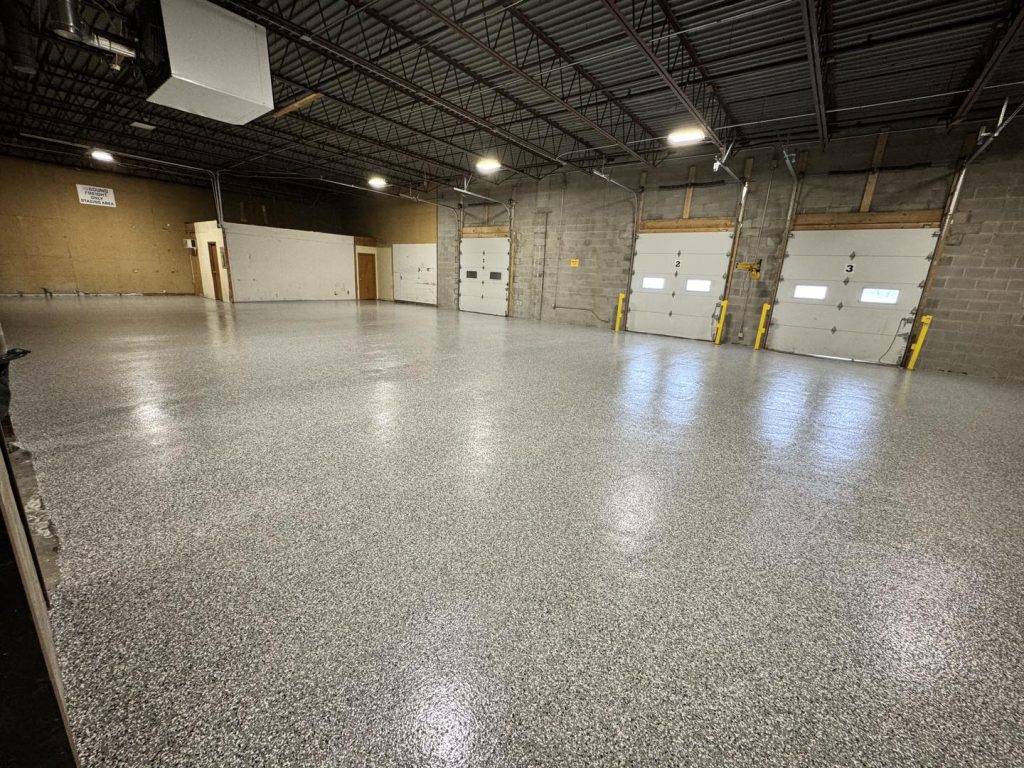
Residential epoxy flooring can combine functional protection with a cleaner finished appearance. Decorative flake systems are especially popular for garages because they help create visual depth while making ordinary dust and minor debris less noticeable between cleanings.
Color, finish, texture, and slip resistance can also be considered during system selection.
This allows homeowners to build a garage that works as a parking area, workshop, storage space, or home project area without leaving the concrete unfinished.
The goal is not simply making the floor look better on installation day. The finish needs to fit the way the room will be used for years afterward.
When A Heavy-Duty Epoxy Floor Makes Sense
Heavy-duty residential flooring is most valuable in spaces that receive more punishment than ordinary interior floors.
Garages with daily vehicle traffic are an obvious example, but workshops, utility rooms, home gyms, storage areas, and other concrete spaces may also benefit from a professionally installed coating system.
The decision should start with the concrete.
A qualified epoxy floor installer can evaluate the slab, identify visible damage, understand the expected loads, and recommend a system appropriate for those conditions. That reduces the chance of paying for a coating that looks impressive but is not built for the demands placed on it.
Get A Residential Floor Built For Real Use
A garage floor should not become the weak point of an otherwise functional space.
If vehicles, heavy cabinets, tools, equipment, storage systems, and New York weather are constantly working against the concrete, a professionally installed heavy-duty residential epoxy floor can provide a more durable and manageable surface. Our epoxy flooring team prepares the concrete first and builds the coating system around the way the floor will actually be used. From everyday vehicle traffic to demanding residential workshops, the goal is a floor that performs well beyond its appearance.
Contact our team to schedule an estimate and find the right epoxy flooring system for your garage or residential concrete space.
Frequently Asked Questions
Can Residential Epoxy Flooring Hold A Car Or Truck?
Yes. Properly installed residential epoxy flooring is commonly used in garages that hold cars, SUVs, and pickup trucks. The concrete slab carries the vehicle’s structural weight, while the coating protects the slab surface from tire traffic, staining, abrasion, and routine garage wear.
Can Heavy Cabinets Damage An Epoxy Floor?
Heavy cabinets can normally sit on a properly installed epoxy floor, but small metal feet can create concentrated pressure. Protective feet or pads can help distribute the load and reduce the risk of scratches when extremely heavy storage units are used.
Is Epoxy Good For A Home Workshop?
Yes. Epoxy flooring works well in many home workshops because it creates a sealed, easier-to-clean surface that can handle routine tool traffic, carts, equipment, and common spills. The coating system should be selected according to the workshop’s actual use.
Does Epoxy Stop Concrete From Cracking?
No coating can guarantee that concrete will never crack. Existing slab cracks should be evaluated and properly repaired before installation, but future concrete movement can still occur because of settlement, temperature changes, shrinkage, or structural conditions.
How Long Does Heavy Duty Residential Epoxy Flooring Last?
Service life depends on concrete condition, preparation quality, coating system, traffic, chemical exposure, maintenance, and how heavily the space is used. Professionally prepared and installed flooring typically has a major durability advantage over thin DIY coating applications.
Is Professional Epoxy Better Than A DIY Garage Floor Kit?
Professional systems generally involve more thorough concrete preparation, repairs, commercial-grade coating materials, and installation procedures designed around the slab and intended use. DIY products can improve appearance, but inadequate preparation is one of the biggest reasons residential coatings peel or fail under demanding garage conditions.