Skip to content


In the epoxy vs polyaspartic vs polyurea NY debate, each resin wins at something different. Epoxy bonds strongly and costs less, polyaspartic stays clear in sunlight and cures fast in a wide temperature range, and polyurea brings flexibility and impact toughness. For most Western New York garages, a combined system beats any single resin used alone. We install all three across Buffalo, Amherst, and Pittsford through our garage floor coatings service.
These three names get thrown around a lot, and the marketing can be confusing. This guide gives a plain comparison, then explains how the resins work together in a real floor.
Epoxy Vs Polyaspartic Vs Polyurea NY Side By Side
Epoxy is the oldest and most familiar of the three. It is a two part resin that cures into a hard, glossy film. High solids epoxy soaks into ground concrete and bonds very well.
Polyaspartic is a newer type of polyurea chemistry designed for coatings. It cures much faster than epoxy and resists UV light without yellowing. It also cures in a wider temperature range.
Polyurea is a broad family of fast curing resins. In garage floors, it usually serves as a base coat because it stays a bit flexible and handles impacts well. Its speed and toughness suit busy, cold climate garages.
Cure Speed And Install Time
Epoxy is the slowest to cure. Most epoxy floors need longer between coats and a longer wait before driving. That slower pace gives installers more working time, which suits detailed work like metallic designs.
Polyaspartic and polyurea cure fast. That speed is why our garage installs allow walking after one day and parking after two, far sooner than a classic epoxy floor.
Fast cure has a trade off. The installer has less working time, so mixing and spreading must be quick and precise. Skilled crews matter more with fast resins, since there is little room to fix mistakes once the material starts to set.
UV Stability And Color
Sunlight is hard on epoxy. Over time, plain epoxy can amber or yellow, especially near open garage doors. The EPA UV Index shows how strong summer sun can get, and that exposure adds up.
A polyaspartic topcoat is UV stable, so colors stay true. That is why many professional systems finish with polyaspartic even when the layers below use other resins. Some polyurea formulas can discolor in sunlight too, which is another reason polyaspartic usually goes on top.
Cold Weather Performance
Western New York garages are cold for much of the year. Standard epoxy needs a warm slab to cure well. Below its range, it cures slowly and may not reach full strength.
Polyaspartic and polyurea handle cold much better. They cure in a wider temperature range, which opens up more of the calendar for installs. Our polyurea floor services page covers how that base coat performs in colder conditions.
Toughness, Flexibility, And Chemical Resistance
Epoxy cures very hard. That hardness resists abrasion but can make thin epoxy brittle under sharp impacts. Thick, high solids epoxy performs far better than thin kits.
Polyurea stays slightly flexible. That helps it absorb impacts and move a little with the slab as temperatures swing. It makes a strong base coat for that reason.
All three resist oil and road salt once fully cured. Polyaspartic topcoats add strong resistance to hot tire pickup and UV damage. Our earlier comparison of epoxy vs polyurea in New York goes deeper on those two resins.
Cost And Value
Epoxy is usually the least expensive resin. Polyaspartic and polyurea cost more per gallon and need skilled crews. Over the life of the floor, though, the faster install and better UV resistance often make up the difference.
The cheapest floor up front is not always the best value. A floor that yellows or peels in a few years costs more to fix than a stronger floor costs to install. Think about how long you plan to stay in the home and how hard the garage works each winter.
Low odor matters to many homeowners too. High solids systems release fewer fumes than many solvent based products, and the EPA guide to VOCs explains why that matters for air inside the home.
Best Garage Coating System Buffalo Homes Use
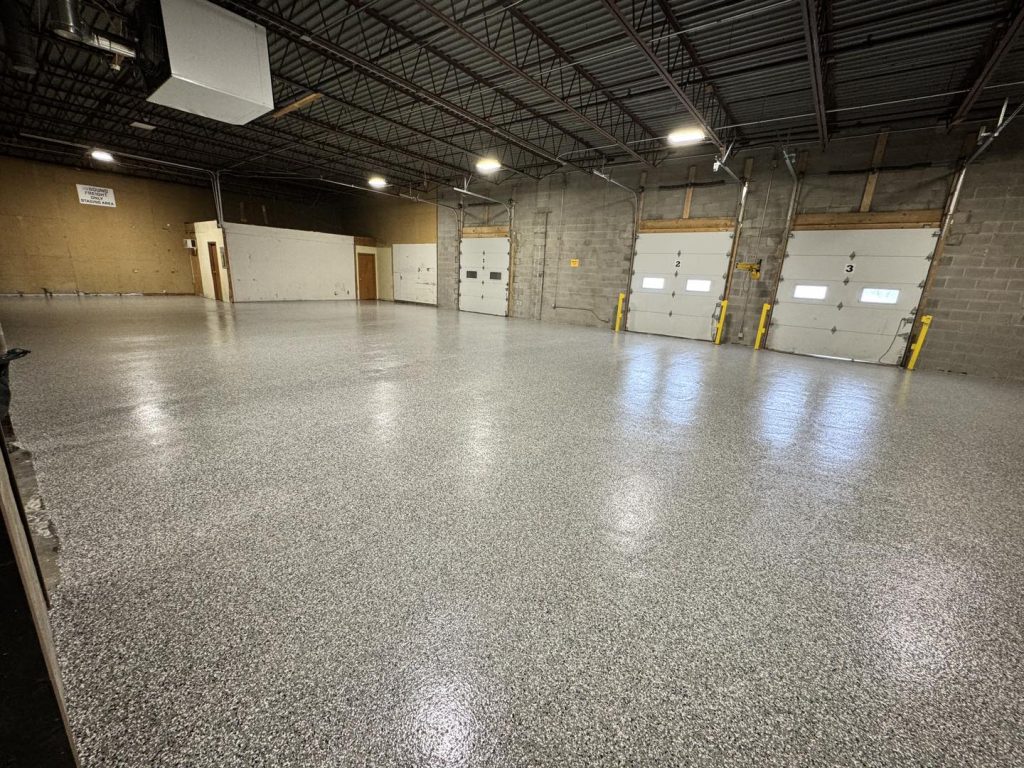
Most professional floors combine resins instead of choosing one. A typical system starts with a polyurea or epoxy base that bonds deep into ground concrete. A full broadcast of flake follows, then a polyaspartic topcoat seals it all.
That mix gives you the bond of the base, the body of the flake, and the UV stability of the top. It also cures fast enough for cold seasons. For most garages in our region, it is the system we recommend.
Plain epoxy still has a place. It works well in basements and interior rooms that never see sun, and it suits metallic designs. Our epoxy flooring page covers where it shines. Our guide to epoxy garage floor coating in New York also explains when epoxy makes sense in a garage.
Matching The Resin To The Room
Garages face sun, salt, hot tires, and cold. That mix favors a fast curing system with a UV stable top. Most homeowners who park cars inside end up there.
Basements are different. They stay cool and dark, with little sun and no tires. Epoxy performs well in that setting, and its longer working time allows decorative finishes. Moisture testing matters even more below grade, since basement slabs often carry more vapor.
Workshops and hobby rooms fall in between. Dropped tools and rolling carts call for impact toughness, which favors a polyurea base. A flake broadcast adds body and hides wear. The topcoat choice then depends on how much sun reaches the floor.
Outdoor patios and pool decks are another story entirely. They need full UV stability and good traction in the rain. That points to polyaspartic chemistry with texture, not plain epoxy.
Which Floor Coating Lasts Longest
Lifespan depends more on prep and thickness than on one resin name. A well prepared, multi layer floor can last 10 to 20 years with regular cleaning. A thin coat of any resin on a poorly prepared slab may fail within a few seasons.
Prep is the hidden factor. We grind the slab mechanically, repair cracks and spalls, clean out salts, and test moisture before choosing materials. Those steps protect the bond no matter which resins go on top.
Choosing A System In Buffalo, Amherst, And Pittsford
Busy commuter garages in Amherst usually do best with a full flake system and a polyaspartic topcoat. In Pittsford, some owners pick metallic epoxy for a finished garage or basement. Older Buffalo garages often need more slab repair before any system goes down.
During a free estimate, we look at the slab and explain which resins suit your floor and habits. Seeing finished samples side by side makes the choice easier.
Coating Comparison Questions
What is the difference between epoxy, polyaspartic and polyurea coatings?
Epoxy bonds strongly and costs less but cures slowly and can yellow. Polyaspartic cures fast and stays UV stable. Polyurea is flexible and tough, so it often serves as a base coat.
Is polyaspartic better than epoxy for a garage?
As a topcoat, usually yes. It resists UV, hot tires, and cold weather better. Epoxy still works well as a base or in rooms without sun.
Which garage floor coating lasts longest?
Lifespan depends most on prep and thickness. A well prepared multi layer system can last 10 to 20 years with regular cleaning.
Does epoxy turn yellow in a garage?
Plain epoxy can amber in sunlight over time. A polyaspartic topcoat protects it from UV damage.
Which coating works best in cold weather?
Polyaspartic and polyurea cure in a wider temperature range than standard epoxy, which makes them better suited to cold climates.
Is polyurea the same as polyaspartic?
Polyaspartic is a type of polyurea chemistry designed for coatings. They are related but behave differently in working time and UV stability.
Find Your Best System With ProShield
There is no single best resin, only the best system for your floor. Matching the chemistry to your garage, your climate, and your habits is what makes a coating last.
Homeowners in Buffalo, Amherst, and Pittsford can find their best system and request a quote from our team. To see all the resins we install, visit the floor types page or our garage floor coatings page.