Skip to content
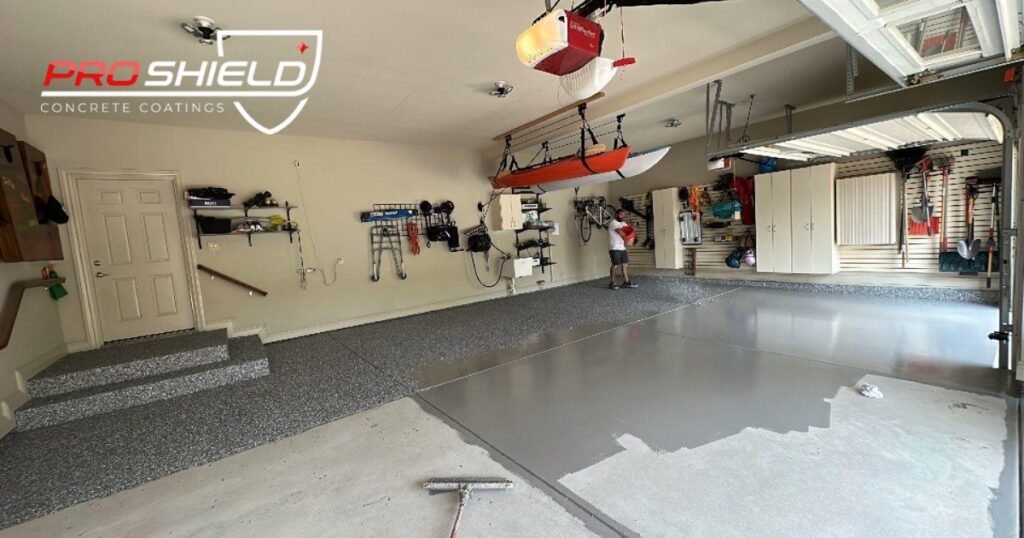
Epoxy flooring home workshop projects in Buffalo need a stronger plan than a clean garage makeover.
A workshop floor takes dropped tools, rolling carts, jack stands, toolboxes, sawdust, oil spots, snow melt, and road salt from parked vehicles. Buffalo’s lake-effect snow and long winter moisture cycles make bare concrete wear faster, especially near garage doors and workbench zones.
A weak paint coating will not protect a slab from impact, abrasion, and salt residue. A properly prepared epoxy floor coating can give the workshop a more useful surface. ProShield Concrete Coatings helps homeowners in Buffalo, Amherst, Cheektowaga, Orchard Park, Hamburg, Lancaster, Tonawanda, and nearby Western New York areas build garage workshop floors around actual use, not showroom photos.
Epoxy Flooring Home Workshop Strength In Buffalo
A Buffalo workshop floor needs impact resistance, but it also needs bond strength. The coating must stay attached when tools drop, carts roll, snow melts, and tires bring salt inside. Many garage floors fail because the installer only thinks about the top layer. We start with the concrete.
Buffalo’s winter climate matters here. Lake-effect snow can create heavy localized snowfall around Western New York, which sends more wet vehicles, boots, and salt into garage spaces during the cold season. ProShield Concrete Coatings New York also tracks rock salt as a statewide winter issue because salt affects surfaces, vehicles, water, and infrastructure.
For homeowners who use the garage as a work zone, Garage Floor Coatings are the most relevant service path. That system can protect the slab while improving cleanup, traction, and daily function.
Why Workshop Concrete Breaks Down Faster
A home workshop concentrates damage in a few small zones. Tools drop near the bench. Jacks and stands press into the floor. Rolling cabinets grind dirt under hard wheels. Work shoes carry grit across the same walking paths. Winter adds saltwater and slush near parked vehicles.
Bare concrete absorbs much of that abuse. It can dust, chip, stain, and wear unevenly. Small pits can spread when moisture reaches weak surface areas. Once saltwater sits in those openings, the floor becomes harder to clean and easier to damage.
Epoxy flooring does not make concrete indestructible. It creates a tougher wear surface over a properly prepared slab. That surface helps manage impact, abrasion, oil drips, and routine cleanup. For Buffalo workshops, the coating needs to work as part of the garage, not as a thin decorative layer.
Impact Resistance Starts With Slab Prep
Dropped tools test the coating. Poor prep fails before the coating chemistry has a chance to perform. Smooth concrete, old paint, dust, oil film, and weak surface paste can block adhesion. A hard coating over weak concrete can still peel, chip, or lift.
We use mechanical preparation to open the slab and remove weak material. Grinding helps the epoxy floor coating bond to sound concrete instead of sitting over contamination. It also exposes cracks, spalling, stains, and hollow areas that need attention before coating.
Homeowners often ask whether etching concrete is enough. For a hard-use workshop, grinding gives a more controlled surface profile. That profile matters when the floor must handle tool drops, equipment movement, and Buffalo winter moisture.
Coating Thickness Matters For Tool Drops
A workshop floor needs more body than a light-duty paint finish. Thin coatings may look clean at first, but they do not provide enough wear depth for impact zones. A better epoxy system uses the right base, build, and protective topcoat for the room’s workload.
The workbench area needs attention because repeated impact happens there. A dropped wrench, socket, clamp, or metal part can damage weak surfaces. A thicker epoxy system can absorb more abuse than paint, while a strong topcoat helps reduce scratches and surface wear.
This is where Epoxy Flooring fits the workshop’s needs. Epoxy gives the floor a durable base system when the slab gets prepared correctly, and the coating build matches the type of work done in the garage.
Salt And Slush Still Need A Plan
Many Buffalo homeowners use the same garage for parking and projects. That creates a floor with two jobs. It must handle tools and workbenches, but it also must manage snow melt, road salt, and tire grime.
Saltwater can sit under tires, storage bins, and rubber mats. It can also move toward cracks and low spots. Over time, bare concrete can scale, stain, and dust. A sealed epoxy floor makes salt cleanup faster and helps keep dirty meltwater from soaking into the slab.
The coating still needs basic care. Salt should not sit for weeks in the same area. A squeegee, mild cleaner, and regular winter cleaning protect the finish. OSHA guidance also emphasizes dry walking and working surfaces where possible, which fits garage workshop safety as much as commercial work areas.
Flake Systems Help Busy Workshops
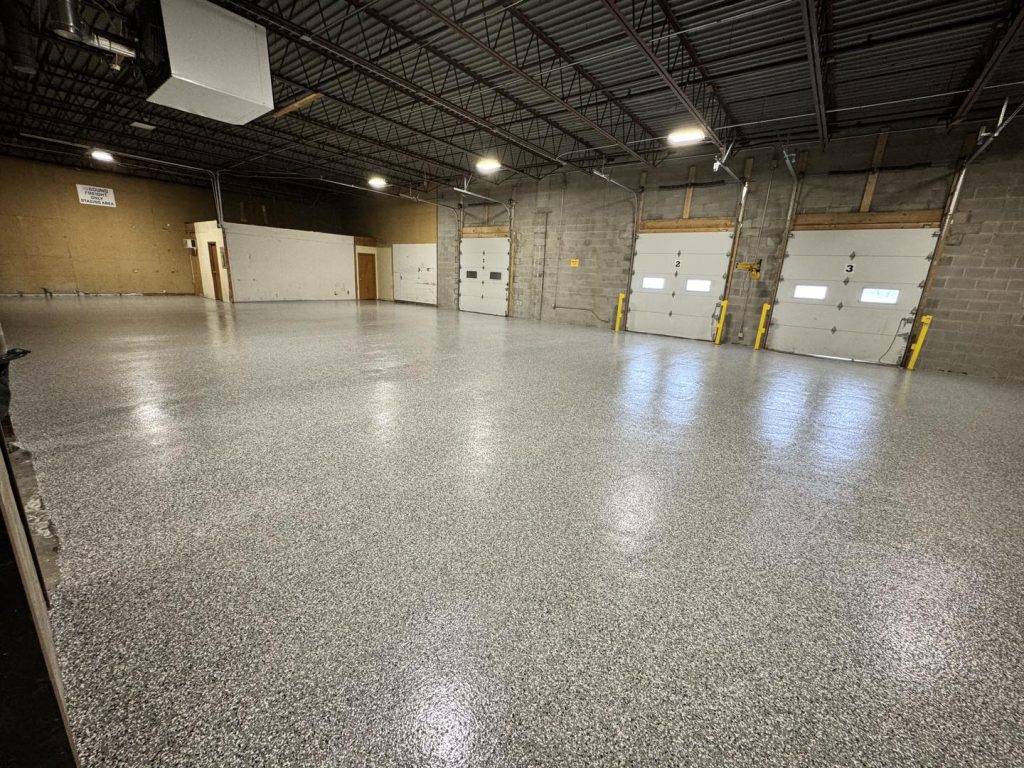
A workshop floor does not need to look plain to perform well. Flake system flooring can give the surface a more finished appearance while helping hide light dust, small debris, and minor scuffing between cleanings. That matters in a garage where sawdust, metal filings, dirt, and salt marks can show quickly.
The flake layer also supports texture. Smooth floors can feel slick when wet, especially near garage doors during winter. A controlled flake broadcast with a protective topcoat can improve footing while keeping the floor easy to sweep and mop.
For a stronger visual finish with practical workshop value, Flake System Flooring can fit the space well. The right blend can make the garage look cleaner without hiding the floor’s working purpose.
Polyaspartic Topcoats Add Wear Protection
A home workshop floor needs surface protection from more than impact. It also sees scratches from dragged tools, rolling wheels, pet nails, ladders, storage racks, and moving equipment. A strong topcoat helps the floor keep its finish longer.
Polyaspartic flooring can work well as a protective top layer over a prepared epoxy system. It can improve stain resistance, cure speed, and surface durability. In a Buffalo garage workshop, the added protection helps with winter grime, oil cleanup, and tool-zone abrasion.
A layered system often works better than choosing one material by name. Epoxy can provide body and bond. Polyaspartic can protect the finished surface. Our Polyaspartic Flooring service helps homeowners compare this option before choosing a workshop floor system.
Workshop Layout Changes Coating Choices
A light hobby workshop does not need the same plan as a garage used for automotive repair, woodworking, welding prep, storage, and heavy rolling cabinets. Use patterns to shape the coating recommendation.
A homeowner with a small workbench and garden tools may need strong cleanup and stain control. A hobby mechanic needs more abrasion resistance near tire paths, jacks, and tool chests. A woodworking area may need easier dust removal and better visibility around equipment. A home gym and workshop combination may need extra traction and impact awareness.
We ask how the space gets used before recommending a system. A smart epoxy flooring company should not sell every garage the same finish. The best workshop floor matches impact zones, moisture exposure, traffic, storage, and cleaning habits.
Why DIY Epoxy Kits Fail In Workshops
DIY kits can look tempting because the box makes the process look fast. Home workshop floors rarely give homeowners the clean slab that those kits require. Old oil, concrete dust, tire residue, paint, salt stains, cracks, and surface wear can all weaken adhesion.
Most kit failures begin below the coating. The surface does not get profiled enough. Moisture signs go unchecked. Cracks remain open. The coating goes down too thin. Then, the tool impact, rolling carts, and winter salt expose the weak bond.
Professional epoxy floor installers take more time on the slab because the coating depends on it. That is especially important in Buffalo garages, where temperature, snow melt, and salt can punish shortcuts within the first winter.
Moisture Can Undermine Workshop Floors
Garage slabs can hold moisture even when the surface looks dry. Condensation can also form when warmer air meets cold concrete. Homeowners describe this as a sweating garage floor. In a workshop, moisture creates extra concerns because tools, cabinets, and equipment may sit directly on the floor.
EPA moisture guidance connects mold control with moisture control and recommends keeping indoor humidity below 60 percent when possible. Garages are not finished living areas in most homes, but the same moisture principle applies. Wet surfaces create cleaning, storage, and safety problems.
We review moisture signs before coating. Dark areas, white residue, peeling paint, damp corners, and musty storage zones can all change the installation plan. A coating system must fit the slab’s condition.
Scratches And Chips Need Honest Expectations
Epoxy flooring can take a lot of workshop abuse, but no coating should be sold as scratch-proof. Heavy dragged steel, sharp metal edges, welding slag, and repeated jack stand pressure can mark almost any surface. The right system reduces damage and makes the floor easier to maintain.
Pads under jack stands help protect the coating. Soft wheels on tool cabinets reduce abrasion. Cleaning grit before rolling equipment helps prevent surface scratches. A thicker system and durable topcoat also give the floor a better chance under workshop conditions.
We prefer honest planning over inflated claims. A strong epoxy floor should support the way the homeowner works, while basic care helps protect the investment.
Cure Time Affects Workshop Return
A garage workshop cannot return to full use until the coating cures enough for traffic and equipment. Cure time depends on the product, temperature, humidity, slab condition, and coating build. Buffalo garages can stay cooler than the outside air during shoulder seasons, which can affect curing.
Light foot traffic may return sooner than vehicles or heavy equipment. Rolling a loaded cabinet back too early can leave marks. Parking too early can stress the surface before it reaches proper hardness.
We plan the schedule around the space. Homeowners need a clear timeline for moving tools, storing materials, and bringing vehicles back inside. Proper cure time protects the final finish.
Workshop Epoxy Cost Factors
The cost of epoxy flooring for a home workshop depends on more than square footage. A clean garage with sound concrete costs less to prepare than a floor with oil contamination, old paint, cracks, salt damage, or surface spalling.
A stronger workshop system may include grinding, crack repair, patching, moisture review, epoxy base coat, flake broadcast, and a polyaspartic topcoat. Each step supports performance when the floor needs it. Cutting the wrong step can shorten the lifespan.
Homeowners should compare epoxy flooring contractors by prep standards and system design. A low number means little when the floor must handle tools, carts, winter slush, and daily project use.
Frequently Asked Questions About Workshop Epoxy
What Is The Best Epoxy Flooring For A Home Workshop?
The best epoxy flooring for a home workshop uses mechanical prep, crack repair, a durable epoxy build, and a protective topcoat. Buffalo workshops also need salt, moisture, and winter cleanup planning.
Does Epoxy Flooring Resist Dropped Tools?
A professional epoxy floor coating can handle many common tool drops better than bare concrete or paint. Heavy, sharp impact can still mark the surface, so system thickness and topcoat selection matter.
Is Epoxy Good For A Garage Workshop In Buffalo?
Epoxy works well for Buffalo garage workshops because it helps control dust, stains, salt residue, oil spots, and abrasion. The floor must be prepared correctly for winter conditions.
Can Epoxy Stop Concrete Dust In A Workshop?
Epoxy can stop concrete dusting when the slab remains sound enough for coating. We grind weak material away, clean the surface, and seal the concrete with a stronger floor system.
Are Epoxy Floors Slippery In A Workshop?
Smooth epoxy can feel slick when wet. A flake system with controlled texture can improve traction for workshop floors exposed to snow melt, spills, and regular foot traffic.
Does Epoxy Flooring Scratch Easily?
Quality epoxy with a strong topcoat resists normal workshop wear, but dragged metal and sharp tools can scratch the surface. Good coating design and smart equipment pads help reduce damage.
How Do You Clean Epoxy Workshop Floors?
Sweep grit often, wipe oil spots quickly, and wash salt residue with a mild cleaner. Avoid harsh solvents and metal scraping tools that can damage the coating surface.
Is Epoxy Better Than Paint For Workshop Floors?
Epoxy is stronger than floor paint for most home workshops. Paint stays thinner and fails faster under rolling cabinets, tool impact, saltwater, and tire traffic.
How Long Does Workshop Epoxy Flooring Last?
A properly installed workshop epoxy floor can last many years with normal care. Lifespan depends on prep quality, slab condition, impact level, cleaning habits, and winter salt exposure.
Who Does Epoxy Floors Near Me In Buffalo?
ProShield Concrete Coatings installs home workshop epoxy flooring across Buffalo and nearby Western New York areas. We match the coating system to the slab, tools, traffic, and winter conditions.
Build A Stronger Workshop Floor in Buffalo, NY
A serious home workshop needs a floor that can take impact, cleanup, salt, moisture, storage, and rolling equipment. ProShield Concrete Coatings helps Buffalo homeowners turn weak concrete into a cleaner and tougher work surface with the right epoxy flooring services. We inspect the slab, prepare the concrete, repair problem areas, and match the coating system to the way the garage gets used. Contact Us