Skip to content

Residential epoxy floors are easy to maintain, but Buffalo weather creates specific problems that homeowners should not ignore. Snow, road salt, lake-effect moisture, grit, and freeze-thaw cycles can shorten the clean look of a garage, basement, patio, or utility floor when care is inconsistent.
Epoxy floor maintenance residential planning matters most in NY homes because wet boots, vehicle slush, pet traffic, storage bins, and seasonal equipment all land on the same surface. A well-installed epoxy floor coating can handle daily use, but smart cleaning keeps the floor sharper, safer, and easier to own for years.
Why Buffalo Epoxy Floors Need Local Care
Buffalo floors deal with more winter residue than many residential floors across New York. Lake-effect snow forms when cold air moves over warmer Great Lakes water, collects moisture, and drops heavy snow downwind, which puts Buffalo and nearby towns under repeated snow events through winter.
That weather pattern matters inside garages and lower-level spaces. Vehicles carry slush into the garage from Amherst, Cheektowaga, Hamburg, Orchard Park, Tonawanda, and surrounding areas. Shoes bring grit across the basement steps and entry areas. Stored snowblowers, shovels, bikes, bins, and tools can drag sand across the coating. Good maintenance does not need to be complex.
It needs to match the way Buffalo homes actually use their floors.
Epoxy Floor Maintenance Residential Basics
Residential epoxy floor maintenance starts with removing abrasive grit before it gets ground into the surface. Sand, salt, and small stone particles act like sandpaper under tires, shoes, chairs, storage containers, and workbench stools.
A soft broom, dust mop, or shop vacuum works well for dry cleanup. For wet cleanup, use a mild cleaner with warm water and a soft mop. Harsh cleaners are not needed for normal residential epoxy flooring. They can leave residue, dull the finish, or make the surface feel slick.
Our Garage Floor Coatings are built around the way Buffalo garages handle road salt, parked vehicles, storage, and winter cleanup. A stronger system gives maintenance a better starting point.
Clean Salt Before It Builds Up
Road salt is one of the biggest threats to the clean look of a residential epoxy floor in Buffalo. Salt residue can dry into a white film, collect near tire paths, and make the floor look dull even when the coating is still sound. Rinse or mop salt-heavy areas during winter instead of waiting until spring. Focus near garage doors, tire parking spots, entry paths, and areas where snow melts from wheel wells.
Warm water usually removes most residue. A mild, non-abrasive cleaner can help when film remains. Avoid using sharp scrapers on frozen slush. Let the ice soften first. Scraping hard against the coating can create avoidable marks, especially near the garage threshold.
Use The Right Cleaner For Epoxy Floors
A mild cleaner protects the finish and makes the floor easier to rinse. Strong degreasers, citrus solvents, bleach-heavy mixtures, and abrasive powders can leave streaks or affect the appearance of the topcoat.
For normal residential epoxy floor maintenance, mix a small amount of gentle cleaner with warm water. Mop the floor, then rinse if the cleaner leaves any film. Standing soap residue can make a floor look cloudy and may reduce traction.
Oil, grease, fertilizer, paint, and automotive fluids should be wiped up quickly. Epoxy flooring resists many household and garage spills, but long contact time can make cleanup harder.
Protect High-Traffic Garage Zones
Buffalo garage floors often wear fastest where tires stop, snow melts, and storage moves. Tire paths, garage entrances, and workbench zones deserve extra attention during maintenance.
Use soft pads under heavy storage racks, tool chests, and movable furniture.
Lift heavy items instead of dragging them. Keep metal shovel edges, snowblower skids, and sharp equipment parts from scraping across the floor. A professionally installed Epoxy Flooring system gives residential spaces better protection than bare concrete, but maintenance still helps preserve the surface.
The coating works harder when grit stays on the floor for weeks.
Handle Dust Before It Spreads Indoors
Even coated floors need routine dust control. Dry grit can move from garages into mudrooms, kitchens, basements, and entry areas. A sealed epoxy floor helps because it does not shed powder like bare concrete. Cleaning still matters because outdoor grit and winter debris settle on top of the coating.
Sweep or vacuum garage floors more often during snowy months, especially when family members walk through the garage daily. For dusty lower-level spaces, Basement Floor Coatings can create a cleaner surface that supports easier maintenance than older unfinished concrete.
Avoid Damage From Wrong Tools
The wrong cleaning tools can age an epoxy floor faster than daily foot traffic. Steel wool, stiff wire brushes, harsh scouring pads, and aggressive floor machines can scratch or dull the finish. Use soft-bristle brushes for stuck-on grime. Use microfiber or soft cotton mops for regular cleaning.
A squeegee can help move water out of a garage after winter melt, especially near the door. Pressure washing can work in some garage settings, but pressure, nozzle choice, and water control matter. Residential floors connected to finished walls or storage areas need careful water handling.
Check The Floor After Winter
Spring is the right time to inspect a Buffalo epoxy floor. Winter exposes weak spots, poor drainage areas, heavy salt zones, and places where grit collects under tires. Look for dull patches, chips, edge wear, cracks, coating damage, or areas that stay dirty after cleaning.
Small issues are easier to address early than after traffic reaches the same spot. Concrete dust should not appear through a properly maintained coating. When powder starts showing from exposed concrete, the floor may have a chip, worn edge, failed old coating, or prep-related issue from a past installation.
Maintain Flake And Textured Floors Correctly
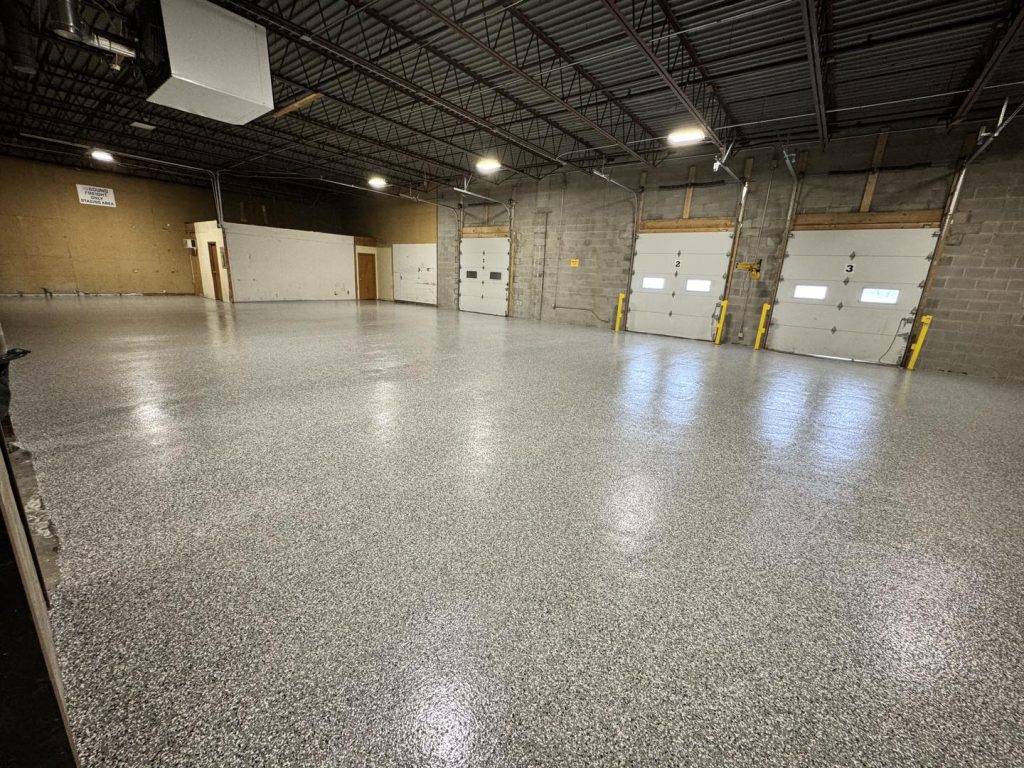
Flake floors and textured epoxy systems give residential spaces a finished look with added traction. They also hide light dirt better than plain gray concrete or thin paint. Maintenance still needs regular rinsing because grit can settle into the texture.
Use a soft brush when dirt sits in the surface profile. Mop in sections and change dirty water before it spreads film across the floor. For garage floors, push meltwater out instead of letting salty water dry in place. Our Flake System Flooring is a strong choice for Buffalo homes that need better appearance, cleaner maintenance, and traction support in garages, basements, and other residential spaces.
Know When Maintenance Cannot Fix the Floor
Maintenance protects a good floor, but it cannot fix a failed coating system. Peeling, bubbling, widespread chips, moisture-related blisters, and heavy concrete dust usually point to deeper problems.
Concrete prep plays a major role in long-term performance. A failing floor may need grinding, repair, and a new coating system instead of another cleaning product. ProShield Concrete Coatings can review the surface and recommend the right repair or replacement path.
FAQs About Residential Epoxy Floor Maintenance
How Often Should I Clean My Epoxy Garage Floor?
Clean dry grit weekly during winter and mop salt-heavy areas as needed. Buffalo garages may need more frequent rinsing when vehicles bring in slush and road salt.
What Cleaner Is Best For Residential Epoxy Floors?
Use warm water with a mild, non-abrasive cleaner. Avoid bleach-heavy mixes, strong solvents, abrasive powders, and oily soaps that can leave film on epoxy flooring.
Can Road Salt Damage Epoxy Floor Coating?
Road salt should not sit on the floor for long periods. Regular rinsing helps protect the finish, reduce white residue, and keep the surface easier to clean.
Should I Wax A Residential Epoxy Floor?
Most residential epoxy floors do not need wax. Wax can create buildup, change traction, and make future cleaning harder unless the system specifically calls for it.
Can I Use A Pressure Washer On Epoxy Flooring?
A pressure washer may work in some garages, but use care near edges, walls, outlets, storage, and cabinets. Excessive pressure can damage weak spots.
Why Does My Epoxy Floor Look Cloudy After Mopping?
Cloudiness usually comes from soap residue, dirty mop water, or salt film. Rinse with clean warm water and dry the surface to restore a cleaner finish.
How Do I Remove Tire Marks From Epoxy Floors?
Use a mild cleaner, warm water, and a soft brush. Avoid harsh solvents unless recommended by a coating professional because strong chemicals can affect the finish.
Keep Your Buffalo Epoxy Floor Cleaner Longer
A long-lasting residential epoxy floor starts with the right installation and stays cleaner with smart care.
Buffalo homes need maintenance that accounts for snow, salt, lake-effect moisture, garage traffic, and seasonal storage. ProShield Concrete Coatings installs and supports epoxy flooring systems built for Western New York conditions. For help with a new floor, repair questions, or a better maintenance plan, Contact Us and get direct guidance from a coating team that understands Buffalo floors.