Skip to content

Mudrooms take more abuse than most interior spaces. Wet shoes, muddy boots, pet paws, road salt, dripping coats, sports gear, and daily foot traffic can quickly wear down ordinary flooring. Epoxy flooring for a mudroom creates a seamless, durable surface that is easier to clean and better suited to moisture, dirt, and repeated use. A professionally installed epoxy floor coating can also make the room feel more finished. Instead of treating the mudroom as a utility space with disposable flooring, homeowners can create a practical transition zone that connects garages, entryways, laundry rooms, and living areas without sacrificing appearance.
Why Epoxy Flooring Works Well in a Mudroom
A mudroom floor needs to handle conditions that change throughout the year. Rain brings water and dirt indoors. Winter footwear can carry moisture, grit, and deicing residue. Children and pets add another layer of spills and mess.
Epoxy flooring creates a continuous coated surface without grout joints or wide seams where dirt can collect. Once properly installed, the floor can withstand routine cleaning while helping protect the underlying concrete from everyday wear.
The system can also be customized according to how the mudroom is used. Decorative flakes can provide visual texture, while different finish options can make the flooring complement nearby garages, kitchens, laundry rooms, or hallways.
Epoxy Makes Mudroom Cleanup Easier
Mudrooms are supposed to contain mess before it reaches the rest of the house. Flooring should support that job instead of creating more maintenance.
Dried mud, dust, pet hair, and ordinary debris can usually be swept or vacuumed from a coated floor. Wet footprints and spills can be wiped or mopped without cleaning grout lines or porous flooring joints.
A seamless epoxy floor also gives homeowners fewer small gaps where grime can become trapped. Proper cleaning still matters, but maintaining the room becomes much simpler when the floor itself is designed for demanding everyday use.
Better Protection Against Water and Wet Footwear
Mudrooms frequently experience standing droplets and repeated moisture exposure. Shoes may sit on the floor while wet, umbrellas can drip near the entrance, and snow-covered boots may leave puddles during colder months.
A correctly installed epoxy floor coating creates a nonporous surface layer that helps prevent ordinary surface moisture from soaking directly into the concrete.
Existing slab moisture is a separate issue. Moisture vapor traveling through concrete can interfere with coating adhesion if the slab is not evaluated before installation. Professional epoxy floor installers inspect the concrete and determine whether additional moisture-related preparation or mitigation is needed.
Epoxy Flooring Can Handle Heavy Mudroom Traffic
A busy mudroom may function as much more than an entrance. Families often use the space for shoe storage, backpacks, pet supplies, sports equipment, cleaning products, or access between the garage and house.
Repeated foot traffic and dragged equipment can gradually damage softer flooring materials. Epoxy flooring systems are designed to create a harder-wearing surface over properly prepared concrete.
Durability depends on the complete system rather than epoxy alone. Surface preparation, repairs, coating thickness, product selection, and topcoat quality all influence how well the finished floor performs.
Decorative Flake Epoxy Is a Practical Mudroom Option
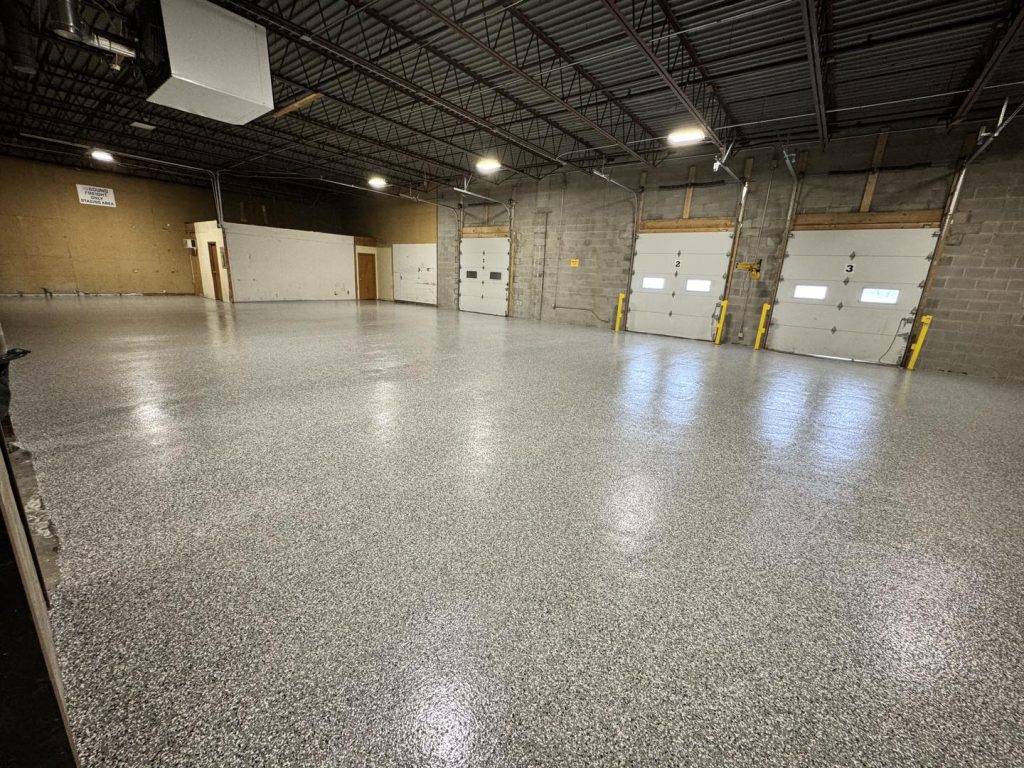
Decorative flake systems are especially useful in utility-focused residential spaces because they combine durability with a more finished appearance.
Colored flakes create visual variation across the floor, which can make everyday dust or light debris less noticeable between cleanings. Flake blends are available in neutral, dark, warm, and contrasting combinations, allowing homeowners to coordinate the mudroom with nearby interior finishes.
The textured appearance also helps prevent the floor from looking overly industrial. A mudroom can still feel connected to the home while using a coating system designed for harder daily use.
Slip Resistance Should Be Considered
Mudroom floors regularly become wet, so traction should be part of the flooring decision.
Extremely smooth glossy coatings can become slippery when contaminated with water, mud, or snow. Depending on the coating system, installers can incorporate texture or traction additives into the finish to improve grip.
The correct amount of texture matters. Too little may not provide enough traction, while an overly aggressive surface can become more difficult to clean. A professional installer can balance cleanability, appearance, and slip resistance based on how the room will be used.
Surface Preparation Determines Long-Term Performance
Installing epoxy flooring over concrete involves much more than applying coating with a roller.
Concrete should first be evaluated for cracks, contamination, previous coatings, surface weakness, and moisture concerns. Mechanical surface preparation is commonly used to remove weak material and create the profile needed for stronger coating adhesion.
Cracks and damaged areas may also need repair before the coating system is installed. Skipping preparation can lead to peeling, delamination, uneven finishes, or premature coating failure.
Professional epoxy floor installation focuses heavily on what happens before the decorative coating is applied.
Can Epoxy Be Installed in a Mudroom Connected to a Garage?
Yes. A connected garage and mudroom can actually be a good opportunity to create a coordinated flooring design.
Some homeowners choose the same decorative flake family in both spaces while adjusting colors or finishes slightly to distinguish the interior mudroom from the garage. Others prefer a cleaner solid-color or subtle decorative system indoors.
The coating systems do not necessarily need to be identical. Garages can experience vehicle traffic, hot tires, chemicals, and heavier mechanical wear, while mudrooms have different priorities involving comfort, appearance, wet footwear, and household traffic.
A contractor can recommend systems appropriate for each environment while keeping the design visually consistent.
Choosing the Right Epoxy Flooring System for a Mudroom
The best system depends on the concrete condition and the way the room is used.
A lightly used side-entry mudroom may need different performance characteristics than a large family mudroom that also serves as a laundry entrance, pet area, and primary path from the garage.
Professional epoxy flooring contractors can evaluate the slab, expected traffic, moisture exposure, cleaning routine, desired appearance, and traction needs before recommending a coating system.
The goal should not simply be to install epoxy. The goal is to build a floor system that fits the room.
Professional Epoxy Floor Installation Makes the Difference
Mudrooms may be relatively small, but small square footage does not make preparation less important.
DIY epoxy products can fail when concrete is not properly cleaned, profiled, repaired, or evaluated for moisture. Poor mixing, incorrect application temperatures, improper recoat timing, and thin coverage can also reduce durability.
Professional epoxy floor installers use preparation equipment and coating systems designed to produce stronger adhesion and more consistent results. A correctly installed floor can turn the mudroom into one of the easiest areas of the home to maintain.
FAQs About Epoxy Flooring for Mudrooms
Is epoxy flooring good for a mudroom?
Yes. Epoxy flooring is well suited to concrete mudroom floors because it creates a durable, seamless surface that handles frequent foot traffic, wet footwear, dirt, pet messes, and routine cleaning.
Is epoxy flooring slippery when wet?
Smooth epoxy can become slippery when wet. Traction additives or textured coating finishes can be incorporated into the system to improve grip in mudrooms where rainwater, snow, or wet shoes are common.
Can mud and road salt damage epoxy flooring?
Quality coating systems are designed to withstand normal household contamination better than bare concrete, although spills, salts, and chemicals should still be cleaned regularly. The exact resistance depends on the coating products and topcoat used.
What epoxy color is best for a mudroom?
Medium-toned grays, tans, and decorative flake blends are popular because they coordinate easily with interior finishes while helping disguise light dirt between cleanings. The best choice depends on lighting, cabinetry, walls, and nearby flooring.
How long does epoxy flooring take to install in a mudroom?
Installation timing varies according to slab preparation, repairs, coating layers, temperature, humidity, and the products being used. Some systems progress quickly, while others require additional curing time before normal traffic can resume.
Can epoxy flooring be installed over cracked mudroom concrete?
Minor cracks can often be repaired as part of surface preparation before coating installation. Larger, moving, or structural cracks require closer evaluation because epoxy coatings cannot guarantee that future slab movement will never become visible.
Upgrade Your Mudroom With a Floor Built for Daily Messes
A mudroom should make everyday life easier. Epoxy flooring for mudrooms provides a durable, cleanable surface that can handle wet shoes, muddy paws, heavy traffic, and repeated household use while giving the room a more finished appearance.
Professional preparation and the right coating system are essential. Homeowners considering an epoxy floor coating should have the concrete evaluated first so the installation can be matched to the slab condition, moisture exposure, traction requirements, and daily demands of the space.