Skip to content

Choosing epoxy flooring entryway Buffalo property owners can rely on starts with one local issue: Western New York entryways take a beating. Snow, slush, salt, sand, and repeated thawing get tracked inside for months. Buffalo also sees frequent winter thaws, lake-effect snow, and long periods when floors stay wet near doors. Those conditions wear down bare concrete fast and make weak coatings fail even faster.
ProShield Concrete Coatings serves Buffalo and Rochester, and its own site positions its systems around Western New York weather, including snow, salt, and freeze-thaw exposure.
Why Buffalo Entryways Need Better Epoxy Flooring
An entryway floor in Buffalo deals with a different kind of abuse than a spare room or finished basement. The surface gets hit with wet boots, chloride residue, grit, and sharp swings between cold outdoor air and heated indoor conditions. That is why we do not treat an entryway like a light-duty decorative floor.
We treat it like a high-traffic transition zone that needs a strong bond, surface texture, and resistance to moisture and salt. Buffalo’s climate pattern of snow, thaw, and refreeze makes that approach necessary.
For many homes and small commercial buildings, the best solution is not paint and not a thin DIY layer.
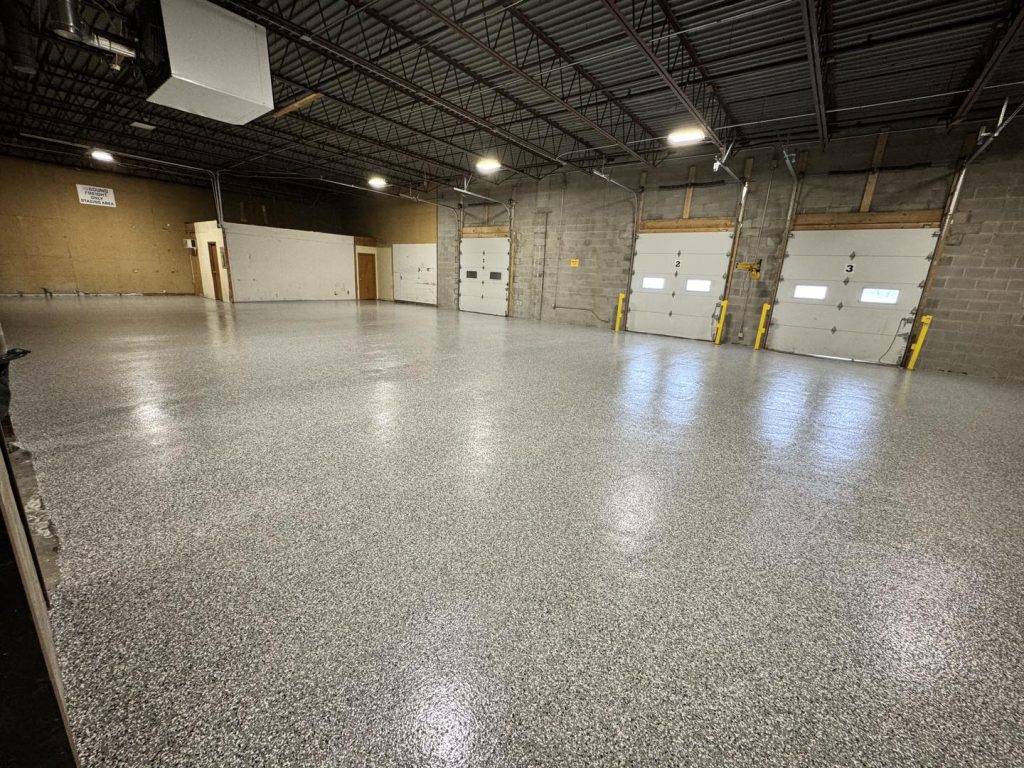
It is a professionally installed epoxy flooring system that is matched to the slab condition and how the entryway is actually used. When an owner also wants more texture and decorative coverage near a front or side door, epoxy flake flooring often fits that need well because it adds visual depth and helps break up dirt and salt residue between cleanings.
ProShield’s service pages also show that the company installs epoxy, flake, polyurea, and polyaspartic systems in Buffalo and Rochester.
What Epoxy Flooring Entryway Buffalo Homes Need
The best epoxy flooring for a Buffalo entryway is not just the hardest coating on paper. It is the system that handles wet traffic, cleans up fast, and stays bonded when the slab sees seasonal moisture movement. Moisture is one of the biggest reasons resin floors fail. Industry sources and technical coating guidance consistently note that excess vapor in concrete can lead to blistering, peeling, and delamination when the slab is not tested and prepared correctly.
That is why we look first at the slab, not just the color chart. Surface profile, crack condition, old paint, trapped moisture, and entryway slope matter more than a brochure promise. ProShield’s New York prep content also emphasizes grinding, removal of weak layers, and repair before coating goes down. In Buffalo entryways, that prep work is often the line between a floor that lasts and one that starts peeling at the doorway edge.
Epoxy Vs Other Coatings At The Door
Epoxy flooring remains a strong choice for many Buffalo entryways because it gives dense surface protection, strong adhesion when installed correctly, and a clean finished look.
It also answers several buyer questions at once, including what epoxy flooring is, whether epoxy floors are durable, and whether epoxy flooring is safe for the home. A properly installed resin floor creates a sealed surface that is easier to clean than bare concrete and better protected from tracked-in moisture and salt.
Some entryways also benefit from polyurea or polyaspartic top layers, especially when faster cure time or added flexibility matters. ProShield’s floor-type pages position polyurea as a faster-curing, more flexible system for tough winter conditions, which is relevant near doors where traffic returns quickly and temperature swings are common. The right answer depends on the traffic level, the slab condition, and the finish the owner wants.
Slip Resistance Matters In Wet Entryways
A Buffalo entryway coating has to do more than look clean. It also has to help manage slip risk when snowmelt gets carried indoors.
OSHA guidance states that walking-working surfaces should be kept clean and, as far as possible, dry, and it specifically addresses wet floors created by melting snow entering a building. That matters for commercial entry zones and also gives a practical standard for residential design decisions. Textured resin finishes can improve traction compared with a smooth, glossy surface chosen only for looks.
That is one reason many Buffalo owners ask whether epoxy floors are slippery or whether epoxy flake flooring is smooth. The better question is how the system is built. Texture level, topcoat selection, and the amount of water exposure at the doorway all affect traction. In an entryway, we usually steer buyers away from a finish that looks slick but ignores winter function.
The Wrong Entryway Coating Usually Fails Fast
We see the same problems when entryway floors are coated with the wrong system. The coating lifts near the threshold. Salt stains stay locked under a weak, clear layer. Moisture creates bubbles. Dirt grinds into a soft film. These are common failure points when owners pick a low-build coating because they want the cheapest answer to how much does epoxy flooring cost or how much does epoxy floor cost.
Upfront price matters, but Buffalo entryways punish shortcuts fast. ProShield’s Buffalo cost page makes that point directly by noting that thin coatings over damaged concrete often fail because they do not account for moisture, surface damage, and winter exposure.
When the entryway concrete is already showing dusting, pitting, or edge damage, prep becomes even more important. That also connects to search intent around how to stop concrete dusting, how to prep for epoxy floor, and how to fix a peeling floor. A strong coating system can solve those problems only after the weak surface is removed and the slab is brought back to a sound condition.
Best Entryway Traits To Look For
| Entryway Need | Why It Matters In Buffalo | Best Coating Priority |
| Salt Resistance | Winter chloride gets tracked in daily | Dense, chemical-resistant top layer |
| Moisture Control | Snowmelt sits near the door | Proper prep and moisture evaluation |
| Slip Control | Wet boots increase fall risk | Textured finish, not slick gloss |
| Easy Cleaning | Sand and grit collect fast | Sealed, seamless surface |
| Strong Bond | Door edges fail first | Mechanical prep and crack repair |
The point is not to pick the most expensive floor. The point is to pick the coating system that matches Buffalo’s conditions at the doorway. That is why buyers comparing what is better epoxy or tiles, is epoxy flooring better than tiles, or is epoxy floor cheaper than tile should focus on moisture, salt, grout maintenance, and cleaning time, not only appearance. In many entryways, a resin floor avoids grout joints, seals the surface, and makes winter cleanup faster.
How We Help Buffalo Owners Choose Correctly
We start with where the door is, how the floor gets wet, and what the slab is doing now. Then we match the coating to the use. Some entryways need classic epoxy flooring. Some need a flake system for traction and appearance. Some need a faster-curing or more flexible resin system because the traffic pattern is tougher. What matters is that the entryway coating works in Buffalo, not just in a showroom sample. ProShield’s service pages and company profile consistently frame its work around Buffalo and Rochester conditions, including snow, salt, freeze-thaw stress, and one-day coating options.
Owners who want help comparing systems for a residential doorway, mudroom transition, side entrance, or small commercial entrance can also review ProShield’s service areas across Western New York and then contact the team for a floor recommendation tied to the actual slab and traffic pattern.
Buffalo Entryway Epoxy Flooring Questions
Is Epoxy Flooring Good For Home Entryways?
Yes, when the concrete is prepared correctly, and the finish is chosen for wet traffic. In Buffalo entryways, the main concerns are snowmelt, salt, grit, and slip resistance rather than simple appearance. A properly installed system handles those conditions far better than paint or bare concrete.
Are Epoxy Floors Slippery Near The Door?
They can be if the finish is too smooth for a wet entry zone. Texture additives, flake broadcast, and topcoat choice all affect traction. That is why entryway epoxy should be designed around winter foot traffic, not only shine.
How Long Does Epoxy Flooring Last In An Entryway?
Service life depends on prep quality, traffic load, and whether moisture was addressed before installation. ProShield’s Buffalo garage coating page says coated floors in Buffalo commonly last 10 to 20 years, which is a reasonable performance range for properly built systems under demanding use.
Is Epoxy Mold Resistant?
A sealed epoxy surface limits moisture absorption at the top of the slab and is easier to clean than porous concrete. That helps reduce conditions that support mold growth on the surface, though any broader moisture problem in the building still needs to be addressed.
Does Water Damage Epoxy Floor Coating?
Standing water on top of a properly cured coating is not usually the main problem. Moisture coming up through the slab is the bigger risk because vapor pressure can lead to blistering or loss of bond when the floor was not tested and built for those conditions.
How Much Does Epoxy Flooring Cost For An Entryway?
Price depends on slab condition, crack repair, prep needs, texture level, and topcoat choice. Thin budget coatings cost less at first, but ProShield’s Buffalo cost guidance notes that cheap systems over damaged concrete often fail sooner because they ignore winter exposure and substrate issues.
What Makes A Reliable Contractor For Entryway Epoxy?
A reliable contractor evaluates moisture, profiles the concrete mechanically, repairs damaged areas, and recommends the right finish for traction and traffic. In Buffalo, any contractor who ignores snowmelt, salt, and doorway wear is skipping the main problem. ProShield’s prep and service pages put those local conditions at the center of the installation plan.
How Do You Clean an Epoxy Floor Near An Entry Door?
Regular sweeping removes salt grit before it scratches the finish. Damp mopping removes residue that builds up during winter. Sealed resin floors are easier to maintain than bare concrete because dirt and moisture stay on the surface instead of soaking in.
Get The Right Entryway Floor For Buffalo Weather
A Buffalo entryway floor needs more than a clean look. It needs a strong bond, moisture awareness, traction, and resistance to snowmelt and salt. That is why the best epoxy flooring choice depends on the slab, the doorway traffic, and the finish required at that exact entrance.
For a system built around Western New York conditions, we direct owners toward ProShield’s Buffalo epoxy flooring solutions and a project review through the contact page.