Skip to content
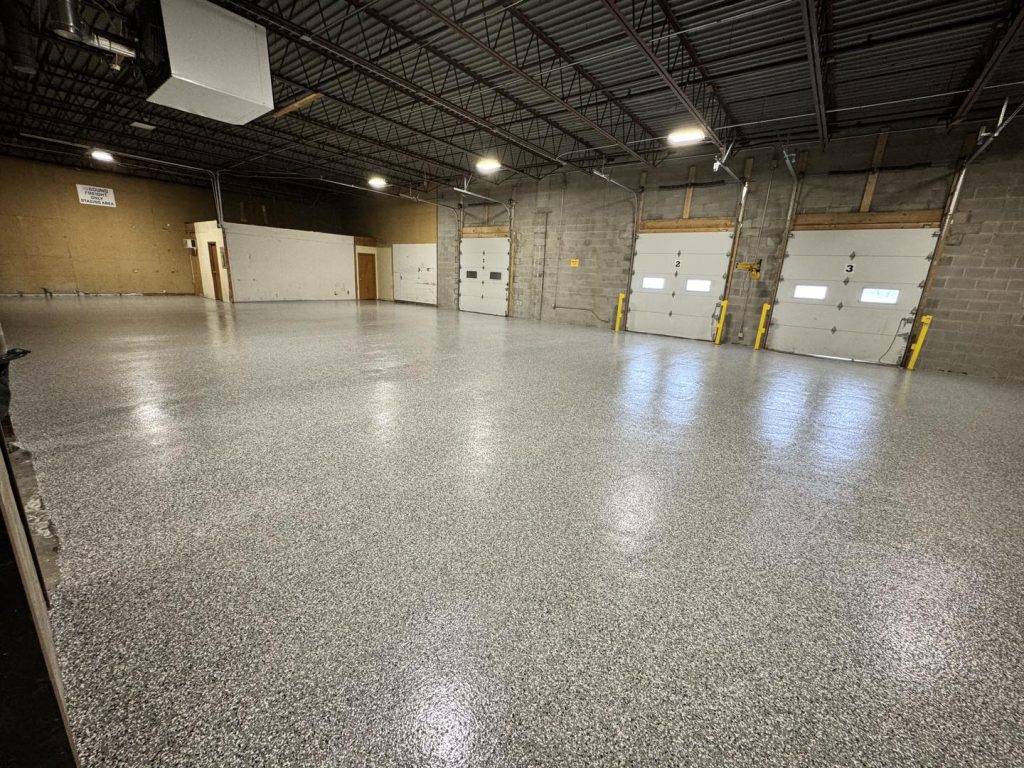
In Western New York, distribution floors face stress most regions never see. Lake-effect snow, tracked-in salt, and wet loading docks punish concrete all winter. Forklifts and pallet jacks grind the surface year-round. That is why Warehouse Epoxy Flooring matters in Buffalo. It is not a cosmetic upgrade.
It is protection against moisture, abrasion, and chemical attack. A properly installed epoxy floor coating bonds to the slab and creates a sealed wear layer. When crews skip prep or use thin concrete coatings, the floor dusts, chips, and stains fast. We build systems that match New York distribution traffic.
Warehouse Epoxy Flooring Built For New York Winters
Winter brings meltwater and deicer residue into every dock bay. Salt brine sits on concrete, then refreezes near doors and ramps. That cycle breaks down weak sealers and opens the slab surface. The result is scaling, dusting, and rough spots that tear up wheels and slow movement.
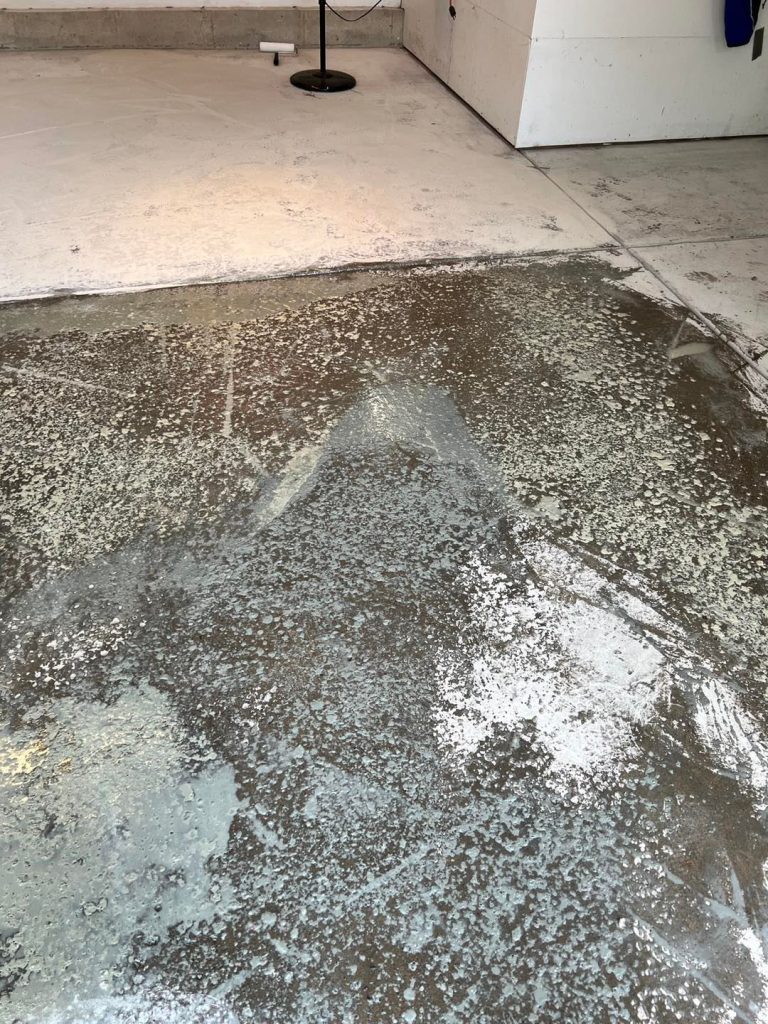
We install heavy-duty epoxy flooring designed for this environment. We grind the slab to remove weak paste and open the concrete for bonding.
Then we apply primers and build coats that resist moisture and chemical exposure. OSHA expects walking-working surfaces to stay free of hazards such as leaks, spills, snow, and ice, which is hard to meet when floors degrade at the surface. For facilities that need a purpose-built solution, our warehouse floor coating systems target the exact wear patterns seen in Buffalo distribution centers.
Forklift Traffic Demands More Than Concrete Coatings
Distribution centers concentrate weight. Forklifts load the same travel paths and turning zones all day.
Bare concrete polishes, then turns slick when wet. It also sheds dust that ends up in products, racks, and equipment. An epoxy floor installation creates a dense wear layer that resists abrasion and reduces dust.
The performance difference shows up at the joints, at turning radii, and along dock-to-storage routes. When we design an epoxy system, we match it to wheel type, traffic volume, and cleaning methods.
That is what separates professional epoxy flooring services from basic concrete floor coatings that wear through in high-load zones. If you want the broader options across resin systems, start with our epoxy flooring systems, and we will match the build to your operation.
Moisture And Slab Behavior In Buffalo Facilities
Moisture does not stop at the door. In New York, cold weather drives condensation. Snowmelt adds water. Some slabs also deal with vapor rising from below. When moisture builds under a coating, blistering and delamination can follow. We treat moisture as a design input, not a surprise.
That is why we evaluate slab condition and moisture risk before coating. Correct prep and compatible primers protect the bond and reduce the chance of failures that shut down aisles.
Safety, Cleanability, And Line Visibility
Distribution centers run on speed and clear flow. Floors must support traction, quick cleanup, and crisp striping. Epoxy systems allow us to build slip resistance into the surface while keeping it cleanable. This matters in dock bays where meltwater and product residue show up daily.
OSHA’s walking-working surface requirements place responsibility on maintaining safe conditions. A stable epoxy surface makes it easier to keep lanes free of trip hazards caused by spalls and broken concrete. It also supports durable line markings that stay visible under traffic, which helps reduce near-misses in tight pick zones.
What Makes Epoxy Fail In New York Warehouses
Most failures come from shortcuts. Thin coatings over smooth concrete do not bond well. Coating over moisture risk without the right primer can trap vapor. Coating over contaminated dock slabs can lead to fisheyes, peeling, and soft spots.
We avoid those outcomes by treating the slab like the foundation it is. Mechanical prep, repair work, and system selection decide performance. The coating is only as strong as the surface under it, especially in Buffalo, where winter moisture and salt stress the concrete every season.
Frequently Asked Questions
How Long Does Warehouse Epoxy Flooring Last In New York?
Service life depends on traffic and system build. With proper prep and a heavy-duty system, many facilities get years of performance before needing a refresh coat in high-wear lanes.
Can Epoxy Floor Coating Handle Forklift Turning Zones?
Yes, when we install a high-build system and address joints and repairs first. Turning zones often need added thickness and a tougher top layer.
Does Salt From Loading Docks Damage Epoxy Flooring?
Salt brine attacks unsealed concrete fast. A quality epoxy system resists salt residue better and prevents absorption into the slab, which reduces surface breakdown.
What Downtime Should We Expect For Epoxy Floor Installation?
Most distribution centers schedule work by zones. We can phase the installation to keep operations moving, but cure time still matters for durability.
Will Epoxy Flooring Get Slippery When Wet?
We can add texture for traction. The key is balancing grip with cleanability for your cleaning routine and dock conditions.
Do We Need Moisture Testing Before Coating?
In Western New York, moisture risk is common due to condensation and seasonal wet conditions. ACI guidance focuses on slab readiness for moisture-sensitive flooring, including epoxy coatings. (concrete.org) Testing helps us choose the right primer and avoid bond loss.
Is Epoxy Better Than Basic Concrete Floor Coatings For Warehouses?
For distribution traffic, epoxy offers stronger bonding, better chemical resistance, and a thicker wear layer than many light concrete coatings.
Get A Warehouse Floor System Matched To Buffalo Conditions
Distribution floors in Buffalo need more than a standard coating. Snowmelt, salt, moisture, and equipment traffic demand a heavy-duty epoxy system built for New York.
We install warehouse epoxy flooring designed for dock bays, aisles, and pick zones with prep and materials chosen for Western New York slabs. Review our coverage in the region on our service areas page and talk with us about your facility through our contact page.