Skip to content
Patios in Buffalo fail differently from interior floors. Snow load sits for months. Ice melt chemicals soak in. Spring thaw drives moisture up through the slab, then summer heat opens surface pores again. Paint flakes. Pavers shift. Bare concrete scales and stains.
A long-lasting patio makeover in New York depends on choosing a coating system that handles freeze-thaw cycles, moisture pressure, and seasonal abuse without cracking or peeling. This guide breaks down epoxy vs polyurea for exterior patios in Western New York, focusing on durability, maintenance, and long-term value rather than surface appearance alone.
Why Buffalo Patios Break Down So Fast
Outdoor concrete in New York never breaks. Winter freeze expands trapped moisture. Thaw cycles pull salts and water back through the surface. According to the National Weather Service, Western New York experiences repeated freeze-thaw conditions each winter, which accelerate concrete deterioration.
The American Concrete Institute also documents how moisture movement and temperature swings contribute to surface scaling and coating failure on exterior slabs. Any patio coating in Buffalo must manage moisture movement and remain stable when temperatures swing from subzero to summer heat.
Epoxy Flooring Performance On New York Patios
Epoxy flooring is widely known for interior strength, but its role outdoors depends on system design. Epoxy flooring provides a strong bond and surface sealing when the concrete is prepared. For patios, epoxy works best as a structural layer that stabilizes the slab surface and blocks moisture intrusion.
Epoxy flooring contractors in New York typically pair epoxy with exterior-rated topcoats to protect against UV exposure and temperature swings. This layered approach allows epoxy flooring services to deliver durability without sacrificing outdoor performance.
Where Epoxy Alone Can Struggle Outdoors
Standard epoxy floor coatings are rigid. On exterior patios that experience direct sun, snow cover, and thermal movement, epoxy without protection can crack or chalk over time. UV exposure and rapid temperature changes near the slab surface are the usual causes.
This does not make epoxy the wrong choice. It means epoxy floor installation outdoors must be designed as a system rather than a single coat.
Polyurea And Its Role In Patio Longevity
Polyurea is more flexible than epoxy and reacts better to rapid temperature changes. In Buffalo patios, this flexibility helps accommodate slab movement during freeze-thaw cycles. Polyurea also cures faster, which can be useful during narrow New York weather windows.
Most high-performing patio systems use epoxy as the base for bond strength, then polyurea or similar materials as the wear layer to manage movement and exposure. When used correctly, this combination improves longevity compared to thin decorative coatings.
Epoxy Vs Polyurea Buffalo Patio Conditions Compared
The epoxy vs polyurea question in Buffalo is rarely about choosing one material in isolation. Epoxy flooring delivers the adhesion and compressive strength patios need to survive snow load and furniture weight. Polyurea adds flexibility and weather tolerance where the slab is exposed to temperature extremes.
Patios that rely on surface-only products often fail within a few seasons. Systems that start with epoxy floor coating installers addressing moisture, surface profile, and build thickness last significantly longer in New York conditions.
Moisture Is The Deciding Factor Outdoors
Exterior patios in Western New York are constantly exposed to moisture from above and below. ASTM standards for concrete moisture testing exist because vapor pressure can push coatings off slabs when ignored. Spring thaw is especially aggressive in Buffalo, where melting snow saturates the ground and forces moisture upward.
Epoxy flooring companies that work outdoors account for this by selecting moisture-tolerant primers and allowing the slab to breathe appropriately within the system.
How ProShield Builds Long-Lasting Patios In Buffalo
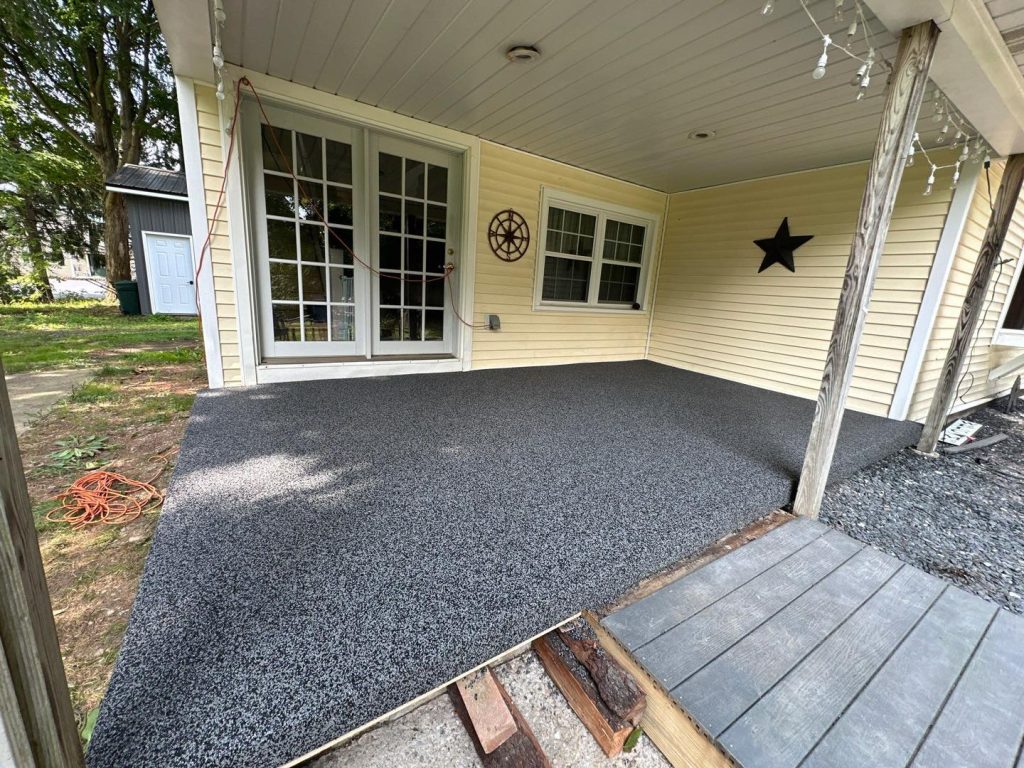
ProShield Concrete Coatings approaches patio makeovers with a system mindset. Their Patio Coatings are designed for New York freeze-thaw cycles, using epoxy flooring as the foundation and selecting exterior-ready layers that manage movement and exposure.
For homeowners comparing connected exterior and interior spaces, ProShield’s Garage Floor Coatings use the same moisture-first philosophy, ensuring consistent performance across different slab conditions.
This approach keeps patios looking finished while avoiding repeat repairs.
Appearance Without Sacrificing Durability
Long-lasting patio makeovers are not limited to plain gray concrete. Epoxy-based systems allow textured finishes, subtle color blends, and slip-resistant surfaces that stay usable during wet seasons. The key is controlling texture and thickness so the surface drains properly and resists abrasion from foot traffic and furniture movement.
Long Term Maintenance In New York Weather
A properly built epoxy and polyurea patio system requires minimal maintenance. Snow removal does not damage the surface. Mild cleaning removes salt residue. No joint shifting or surface is dusting like untreated concrete.
This is where epoxy flooring services deliver value over time rather than short-term appearance.
Long Lasting Patio Makeover Solutions New York FAQs
Is Epoxy Or Polyurea Better For Buffalo Patios?
The best patios use both. Epoxy provides bond strength and surface stabilization. Polyurea adds flexibility and weather tolerance for freeze-thaw conditions.
Will Epoxy Patio Coatings Crack In Winter?
Cracking is usually caused by slab movement or improper system design. When epoxy is used correctly within an exterior system, the cracking risk is reduced.
Can Patio Coatings Handle Snow And Ice Melt?
Yes, when the system is designed for chemical exposure and moisture. Epoxy-based patio coatings resist salt damage better than bare concrete.
How Long Do Patio Coatings Last In New York?
Service life depends on prep and system selection. Well-designed epoxy and polyurea patios often last years without resurfacing.
Are Coated Patios Slippery When Wet?
Traction can be built into the system. Patio coatings do not need to be smooth to look finished.
Can Older Buffalo Patios Be Coated?
Yes. Even older slabs can be coated once surface damage and moisture conditions are addressed.
A Smarter Patio Upgrade For Buffalo Homes
Long-lasting patio makeovers in New York require more than surface cosmetics. They demand epoxy flooring systems that respect moisture movement, freeze-thaw cycles, and outdoor exposure.
For homeowners in Buffalo looking to compare epoxy vs polyurea, honestly, the answer is in system design, not material labels. ProShield Concrete Coatings provides patio solutions built for New York weather. We use epoxy flooring services that prioritize durability first and appearance second.